Windows of Resistance:
Selections from the Marie Runyon Archive
Thank you to Senator Cleare, Assembly Member Lasher, Council Member Abreu, Morningside Heights Community Coalition, Harlem Run, and Defend Harlem for your letters of support alongside the 1,500+ people who have signed CHANGE.ORG/PROTECTRENTERSRIGHTS
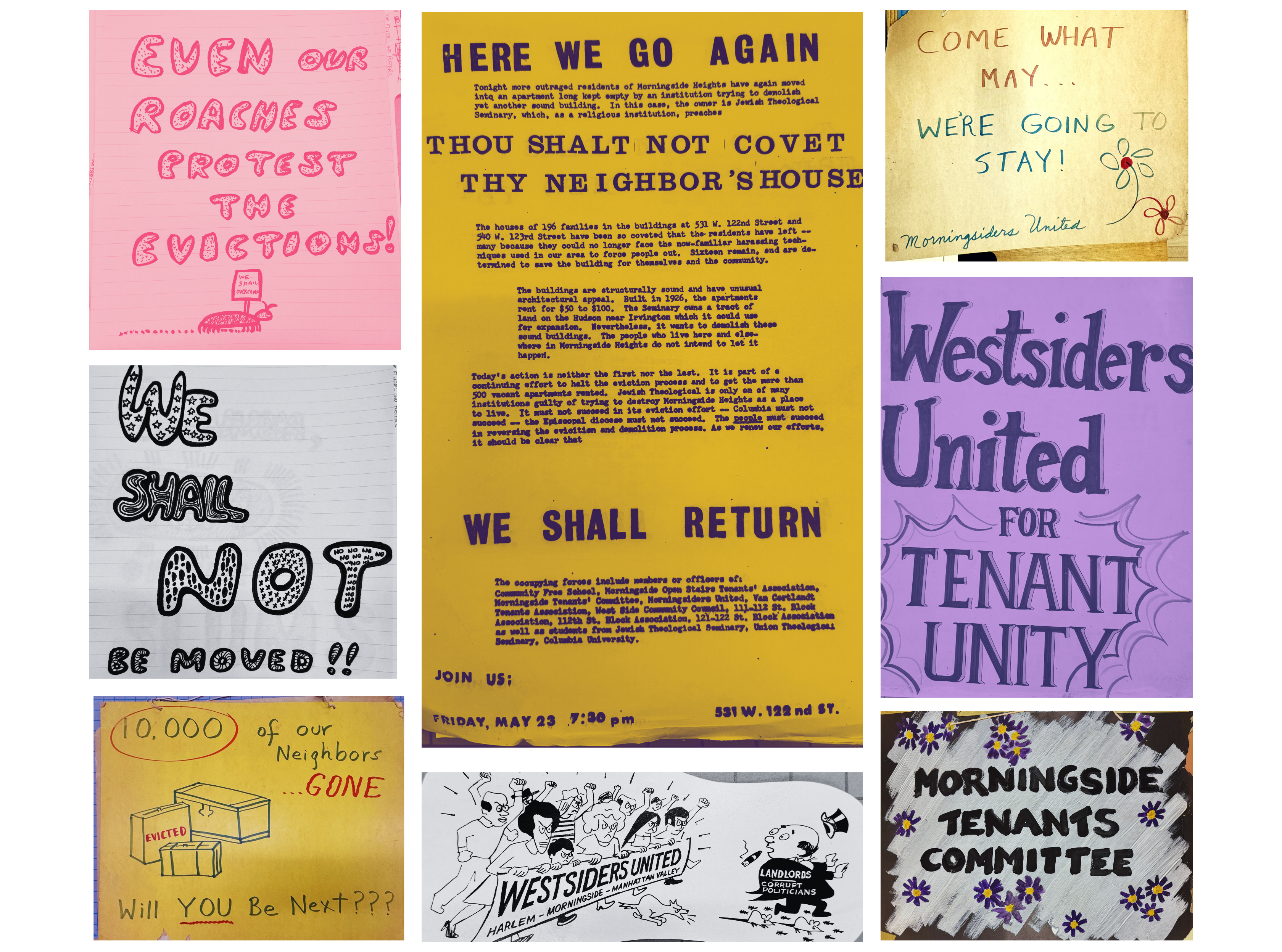
This exhibition presents ephemera from the archive of Marie Runyon (1915–2018), tenant activist, former legislator, and longtime Morningside Heights resident. For 40 years Runyon fought to remain in her home at 130 Morningside Drive despite her landlord Columbia University's eviction attempts; in 2002, her building was renamed Marie Runyon Court, and the street in her honor in 2019.
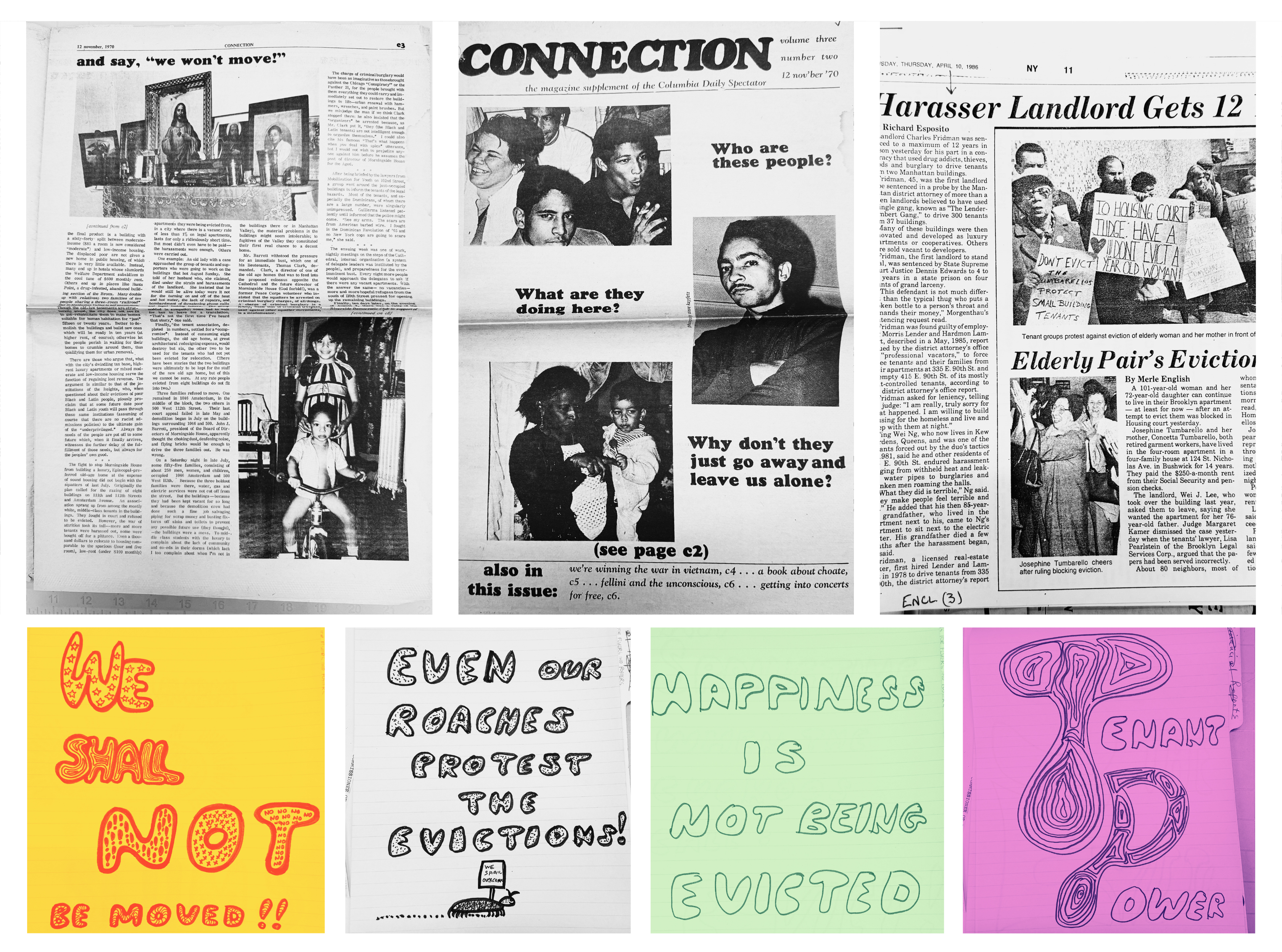
Her activism spanned street theater, rent strikes, strategic litigation, alliances with anti-capitalist movements, and creative fundraising. For her, protest was both logistics and art. The materials on view, once used to mobilize tenants in hallways and sidewalks, now form part of New York City's housing history.
Installed on the windows of my rent-stabilized home where I've advocated for succession rights since my grandmother's 2024 death, this exhibition situates these strategies within the legacy of housing activism in Morningside Heights.
By returning tenant rights ephemera to public view, these works ask how urban memory is preserved, how movements endure across generations, and why women are most often the face of eviction.
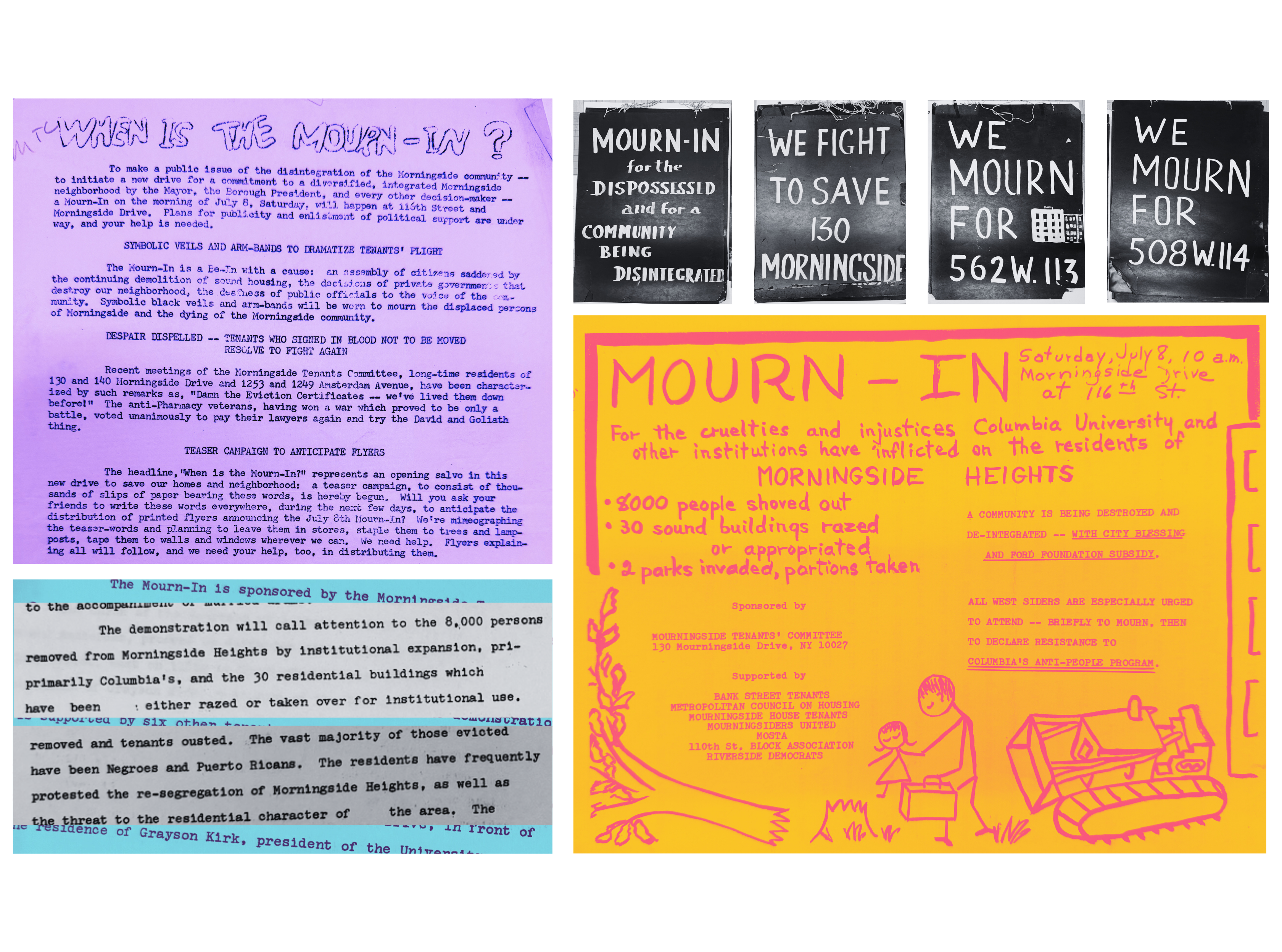
The Mourn-In Protest, 1967
In 1967, in Morningside Heights, Marie Runyon helped organize the "Mourn-In" protest. This action reframed protest as public grieving, a collective acknowledgment of threatened homes, destabilized families, and a neighborhood under pressure. By calling it a "Mourn-In," organizers emphasized that displacement was not an abstract policy but lived loss. The protest was a commitment to a diverse and integrated Morningside Heights. Neighbors and citizens gathered in black veils and armbands to mourn those displaced by institutional evictions and to mark what they saw as the death of the community they cherished. By that time, roughly 8,000 people across 30 sites had already been displaced by institutional development in the area. Those displaced were primarily Black and Puerto Rican residents, a demographic that continues to face displacement in the neighborhood today. The Mourn-In stands as a reminder that communities matter and that resistance can take the form of collective care and mourning.
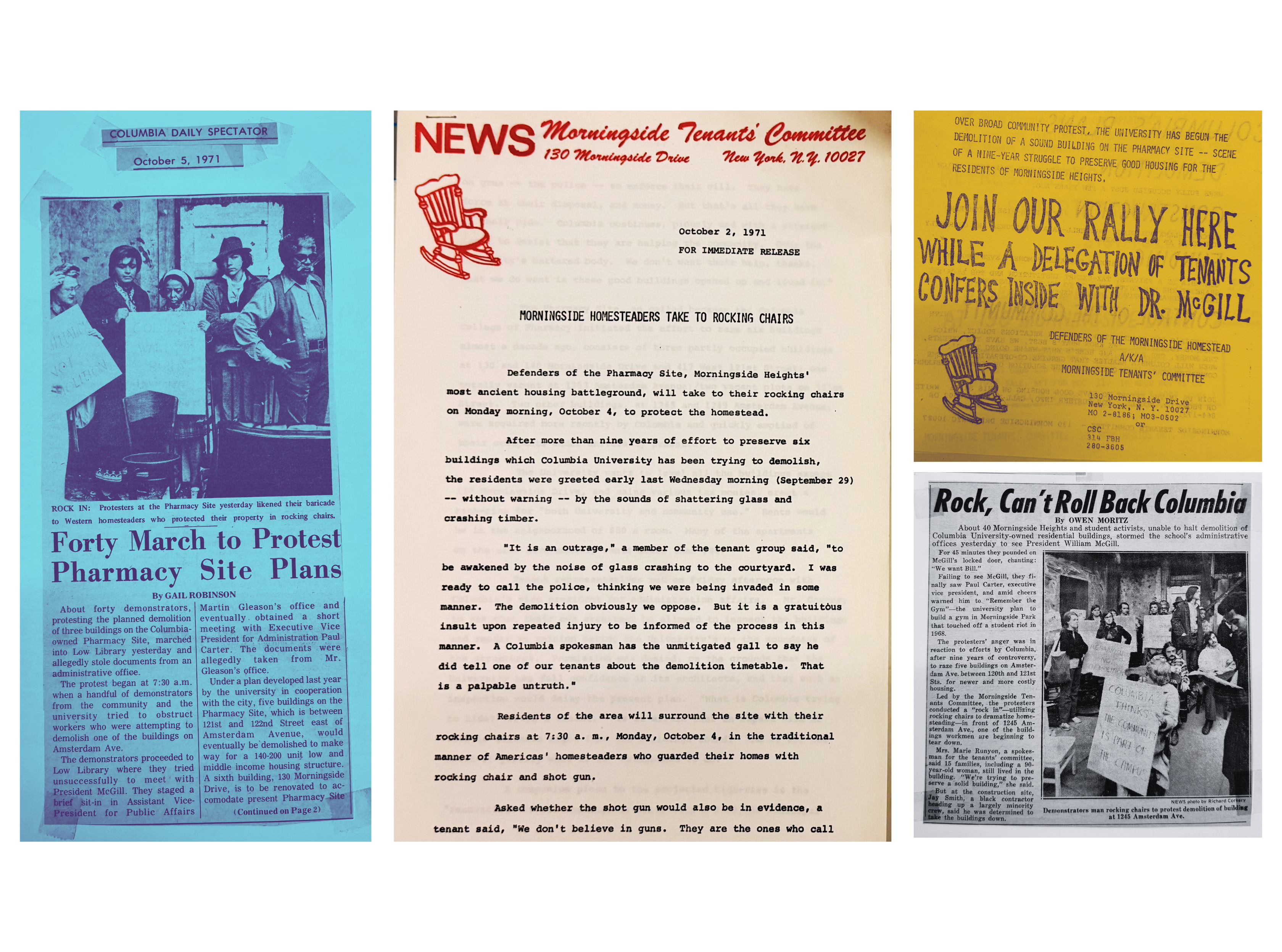
The Rocking Chair Protest, 1971
In 1971, the Morningside Tenants' Committee organized as the Defenders of the Morningside Homestead to protest the demolition of the Pharmacy Site on 121–122nd Streets and Amsterdam Avenue, following nine years of community resistance. On the morning of October 4, tenant activists gathered to defend their "homestead," evoking the image of American pioneers who stood watch from the porch, rocking chair at hand, ready to protect their homes. Their actions drew attention to the human cost of displacement and made clear that the community would not give up its homes without a fight.
Printed Materials, no date
Throughout her lifetime, Marie Runyon preserved records not only of her own activism, but also of groups she supported, including the Black Panthers, anti-war student movements, and the Granny Peace Brigade. Her archive contains clippings and ephemera documenting tenant struggles, evictions, and housing issues across New York City, offering a broader view of the fight for housing justice and social change in the city.